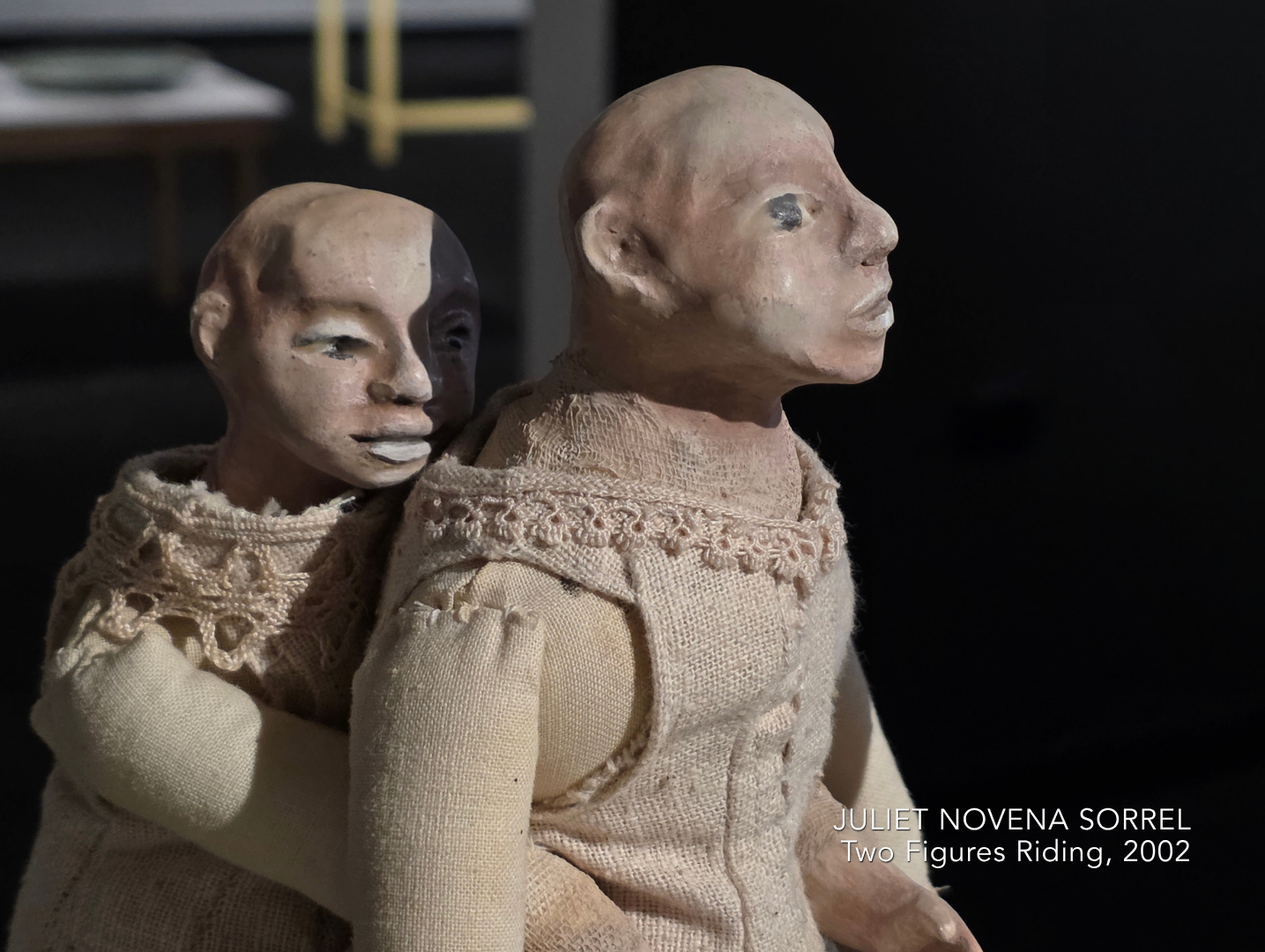
JULIET NOVENA SORREL
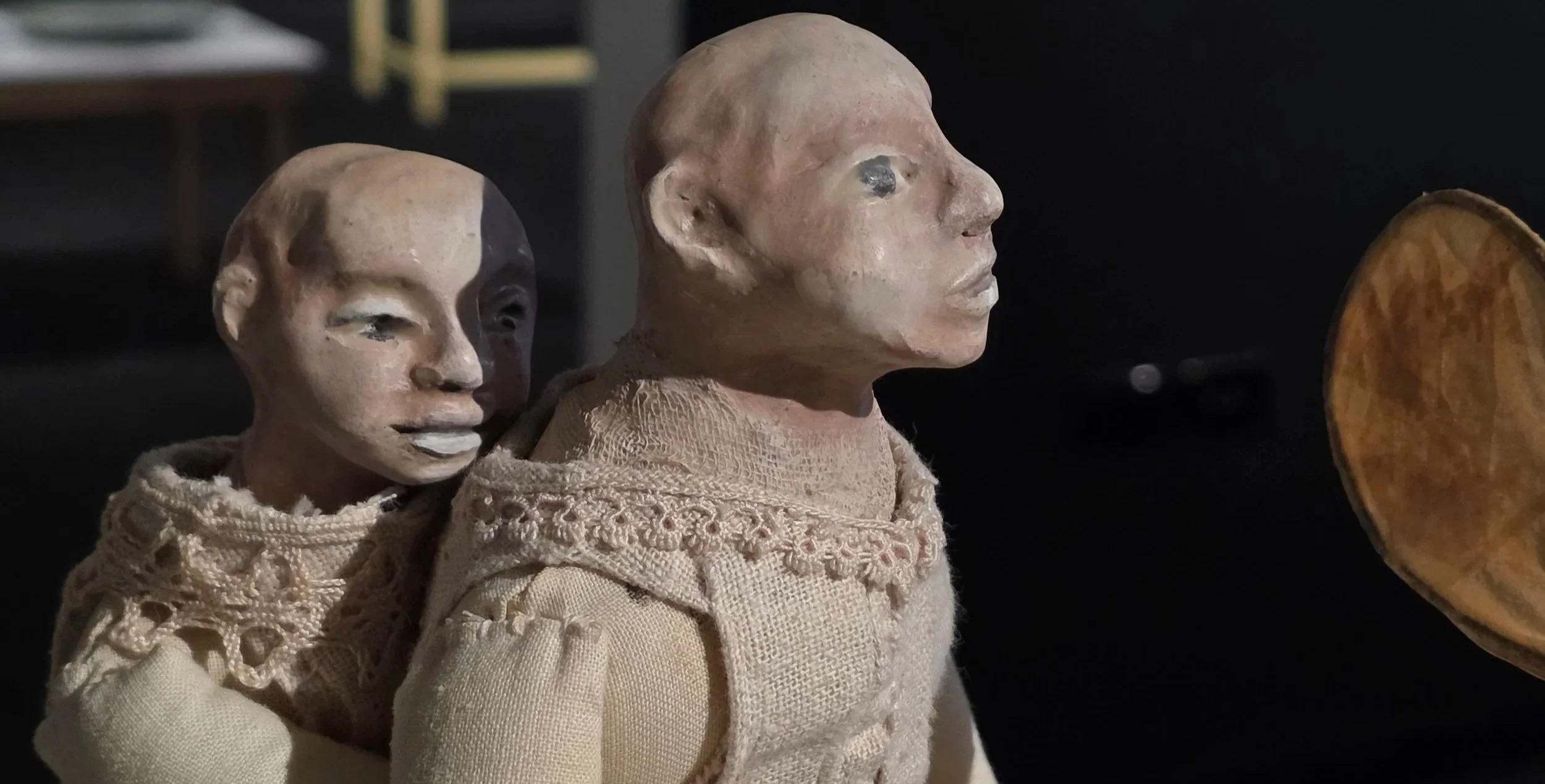
Two Figures Riding, 2002
Spring carries many connotations - renewal, growth and change.
For the Invercargill Public Art Gallery, it has long signalled the Annual Spring Exhibition. First held at Anderson House in 1951, the exhibition became a cornerstone of the gallery calendar, drawing hundreds of entries and building anticipation each October.
Works were selected from submissions across Aotearoa and exhibited throughout the halls and rooms of Anderson Park Art Gallery for four weeks. Opening night became a local institution - crowds gathered in formal dress as red stickers quickly appeared across the walls, marking works sold. Outside, the gardens in full bloom provided a fitting seasonal backdrop to the exhibition within. After 62 years at Anderson House, its closure saw the exhibition relocate to City Gallery in a reduced form. As the gallery turned its attention to collection care and relocation, the awards paused before returning to He Waka Tuia in 2023.
In 2024, the Invercargill Public Art Gallery and the Southland Art Society recognised an opportunity to bring together the Annual Spring Exhibition and the ILT Art Awards, both then operating on a smaller scale. The result was the ILT Murihiku Art Awards - a collaborative model that united two long-standing programmes while continuing to evolve within the contemporary art landscape.
Across these changes, two constants remain: the exhibition’s place at the beginning of spring and its enduring role in shaping the Invercargill Public Art Gallery collection.
Since 1951, acquisitions from this exhibition have accounted for more than ten percent of the collection. They include award-winning works, invited artists and selected entries whose artistic merit and cultural significance have secured their place in Murihiku’s public collection.
Spring: What We Kept brings together 100 works acquired over seven decades. More than a survey of individual artworks, it reveals the collection as the result of an ongoing curatorial process of exhibition, selection, judgement and acquisition. It also acknowledges the funders, donors and benefactors whose generosity has helped build - and continues to shape - the collection we care for today.
On Display:
22 August - 27 September 2026